Pilates can mean very different things depending on where you do it.
You might take a group reformer class with ten or more people, follow the instructor through a planned workout, and pay for a class package.
Or you might work with a physiotherapist who assesses your movement, identifies areas that need attention, and builds a program rooted in Pilates around you.
Both are Pilates.
They simply serve different purposes.
If you have an old injury, chronic pain, desk job stiffness, or a specific movement goal, clinical Pilates may give you the individualized attention you need.
If you simply want to get stronger, move more, and enjoy a workout with other people, group Pilates may be exactly what you are looking for.
And you can absolutely do both.
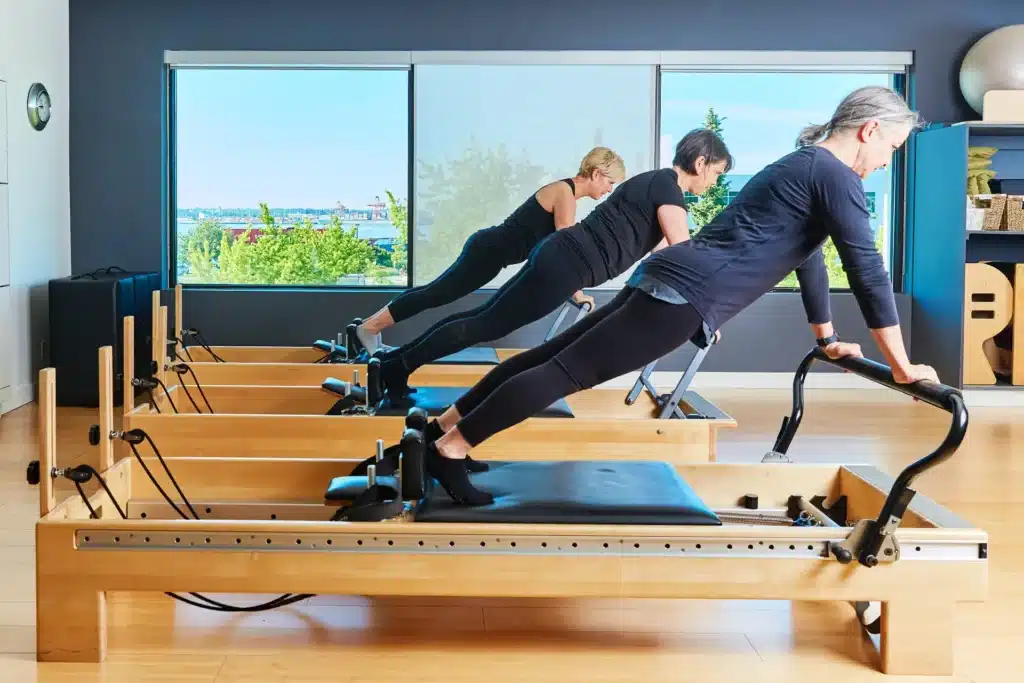
What is the difference between clinical Pilates and group Pilates?
The biggest difference is not the reformer.
It is the purpose behind the session.
Clinical Pilates generally starts with an individual assessment. Your practitioner uses what they learn from that assessment to create and progress your program.
A regular group Pilates class usually follows a planned class format. The instructor teaches the group while offering modifications when appropriate.
Here is the simple version:
| Clinical Pilates | Group Pilates | |
|---|---|---|
| Main purpose | Rehabilitation and individualized movement | General fitness and exercise |
| Assessment | Individual clinical assessment | Usually no clinical assessment |
| Instructor | May be a physiotherapist or another regulated professional | Usually a Pilates instructor |
| Group size | Often individual or a small group | Usually a larger group |
| Program | Built around your needs | Designed for the class |
| Progression | Based on your assessment and response | Based on the class level |
| Insurance | May be eligible under a qualifying health benefit, depending on provider and plan | Generally paid out of pocket |
| Social experience | More individualized | More social and class based |
Clinical Pilates programs are commonly assessment driven and individualized, while standard group classes are generally designed around the needs of the class as a whole. (Performance Recovery Therapy)
When does clinical Pilates make more sense?
Think about what you want from your session.
If you are recovering from an injury, dealing with persistent pain, or unsure why a particular movement keeps bothering you, getting assessed first can make sense.
You may also benefit from clinical Pilates if you:
- Have an old injury that keeps coming back
- Feel weaker on one side of your body
- Have difficulty with certain movements
- Are returning to exercise after surgery
- Want help building strength around an area of concern
- Want a professional to modify exercises for your body
- Are nervous about returning to exercise after an injury
Clinical Pilates can also be useful for people who simply want individualized guidance.
You do not need to be injured to work with a physiotherapist. The practitioner can assess your goals and determine whether clinical Pilates is appropriate for you.
When is group Pilates a better fit?
Group Pilates can be a great choice when your main goal is fitness.
You get a scheduled workout, an instructor to guide you, and the motivation that comes from exercising with other people.
It can help you build strength, mobility, coordination, and body awareness while keeping exercise interesting.
It is also often less expensive per session than individualized clinical care because you are sharing the instructor's time with other participants.
If you already understand your body and have no current concerns, you may simply prefer the energy and structure of a group class.
There is no need to make every workout clinical.
What about your extended health benefits?
This is where the two options can be very different.
A regular Pilates class at a fitness studio is generally an out of pocket fitness expense.
Clinical Pilates may be eligible for coverage when it is provided as an eligible health service by a qualifying professional, depending on your extended health plan.
For example, some Canadian clinics provide clinical Pilates through physiotherapy and bill the appointment as physiotherapy. (Performance Recovery Therapy)
If a chiropractor is providing care, the billing category may be chiropractic rather than physiotherapy. In Ontario, chiropractic and physiotherapy are separate professions, and a chiropractor cannot simply submit a service as physiotherapy unless they are also registered as a physiotherapist. (OCA)
So before assuming that your benefits cover clinical Pilates, ask:
- Who is providing the session?
- What service will appear on my receipt?
- Which benefit category will be used?
- Does my plan cover that provider and service?
- Does the clinic direct bill?
Your insurer can confirm what your particular plan covers.
The best part: you can combine them
You do not have to choose clinical Pilates instead of group Pilates.
Think of them as having different jobs.
Clinical Pilates can help you understand your movement and work on specific weaknesses.
Group Pilates can help you maintain strength, mobility, and consistency.
For example, you might start with several clinical sessions to establish a program. Once you feel more confident, you could add regular group classes.
A sample week could look like this:
- Monday: Clinical Pilates focused on your specific goals
- Tuesday: Rest or an easy walk
- Wednesday: Group Pilates class
- Thursday: Rest
- Friday: Strength training or another activity you enjoy
- Saturday: Group Pilates class
- Sunday: Rest or gentle movement
You could also use clinical Pilates as a periodic check in rather than something you do every week forever.
For example, if you notice an old injury becoming uncomfortable again, you could return to your practitioner for an assessment and adjust your exercise routine.
A simple progression:
- Assessment and individualized clinical Pilates
- Build strength and movement control
- Add one group Pilates class each week
- Increase group classes as comfortable
- Return to clinical care if pain returns or you need help progressing
The exact timeline will depend on your body, goals, and practitioner.
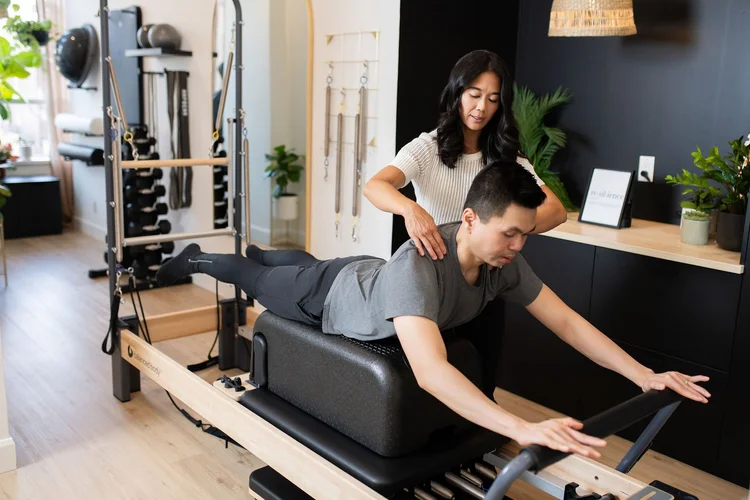
What if you already do group Pilates?
You may not need to change anything.
If you enjoy your classes and feel good doing them, keep going.
Clinical Pilates can simply be an additional tool.
An assessment can help you understand why one side feels weaker, why your back gets stiff after class, or why a particular movement feels uncomfortable.
You can then take what you learn into your regular Pilates classes.
That is one of the most practical ways to combine the two.
What if you have unused benefits?
Check your plan before the year ends.
Many Canadian extended health plans have annual maximums for services such as physiotherapy or chiropractic care, although the amount, rules, and eligibility vary by plan. (OCA)
Unused coverage generally does not mean you can automatically carry the amount into the next benefit year.
If you are considering clinical Pilates, check your remaining coverage and ask the clinic how the service is billed before booking.
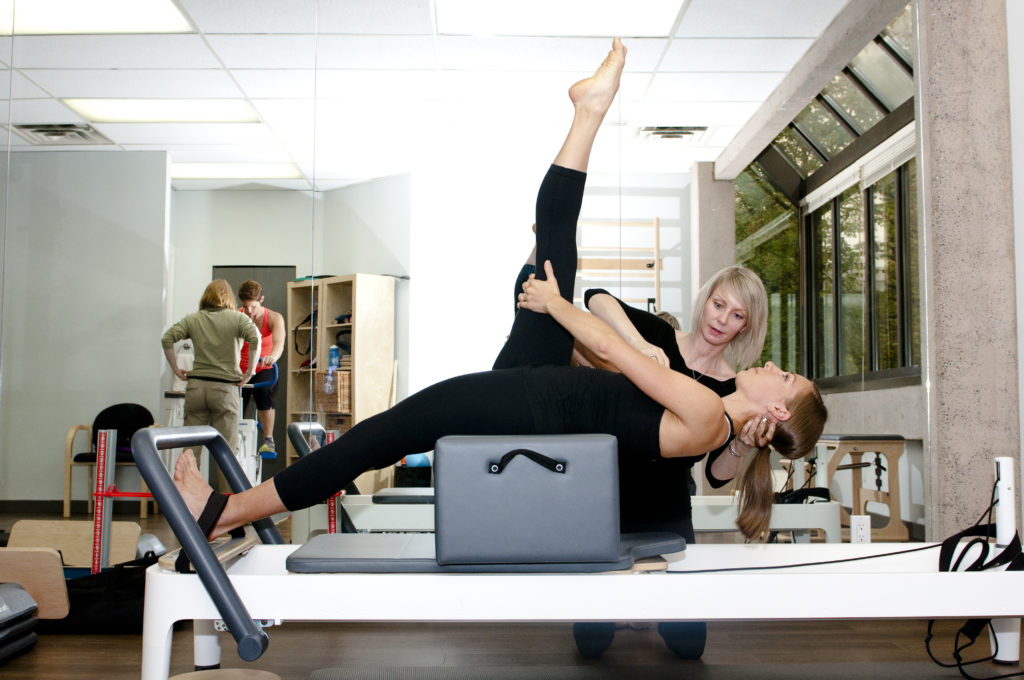
So, which one should you choose?
If you want a general workout, group Pilates may be the simplest place to start.
If you have pain, an injury history, movement concerns, or want an individualized program, clinical Pilates may be worth exploring first.
And if you want both fitness and individualized guidance, there is no reason you cannot combine them.
The goal is not to choose the most expensive or most clinical option.
It is to find the type of movement support that fits your body, your goals, and your benefits.
Find clinical Pilates near you
Ready to see what clinical Pilates options are available?