You may think of a golf assessment as a lesson with a PGA professional.
But there is another way to look at your golf swing.
A TPI golf assessment looks at the connection between your body and your swing. Instead of only asking what your club is doing, it also looks at whether your mobility, stability, strength, and movement patterns may be influencing how you swing.
The Titleist Performance Institute, or TPI, developed its approach around this idea of the Body Swing Connection. Its Level 1 assessment looks at physical capabilities and how they relate to characteristics of a golfer's swing. TPI has certification pathways for golf, fitness, and medical professionals. (MyTPI)
For a Canadian golfer, there is another interesting part.
If your assessment is provided as an eligible physiotherapy or chiropractic service by a qualifying practitioner, it may potentially be claimed through your extended health benefits. The TPI certification itself does not determine insurance coverage.
What is a TPI golf swing assessment?
TPI stands for Titleist Performance Institute.
TPI studies the relationship between the golfer's body and the golf swing. Its approach considers how physical limitations can affect swing characteristics and how the right combination of golf instruction, rehabilitation, fitness, and other expertise can support a golfer. (MyTPI)
A TPI assessment is therefore not simply a swing lesson.
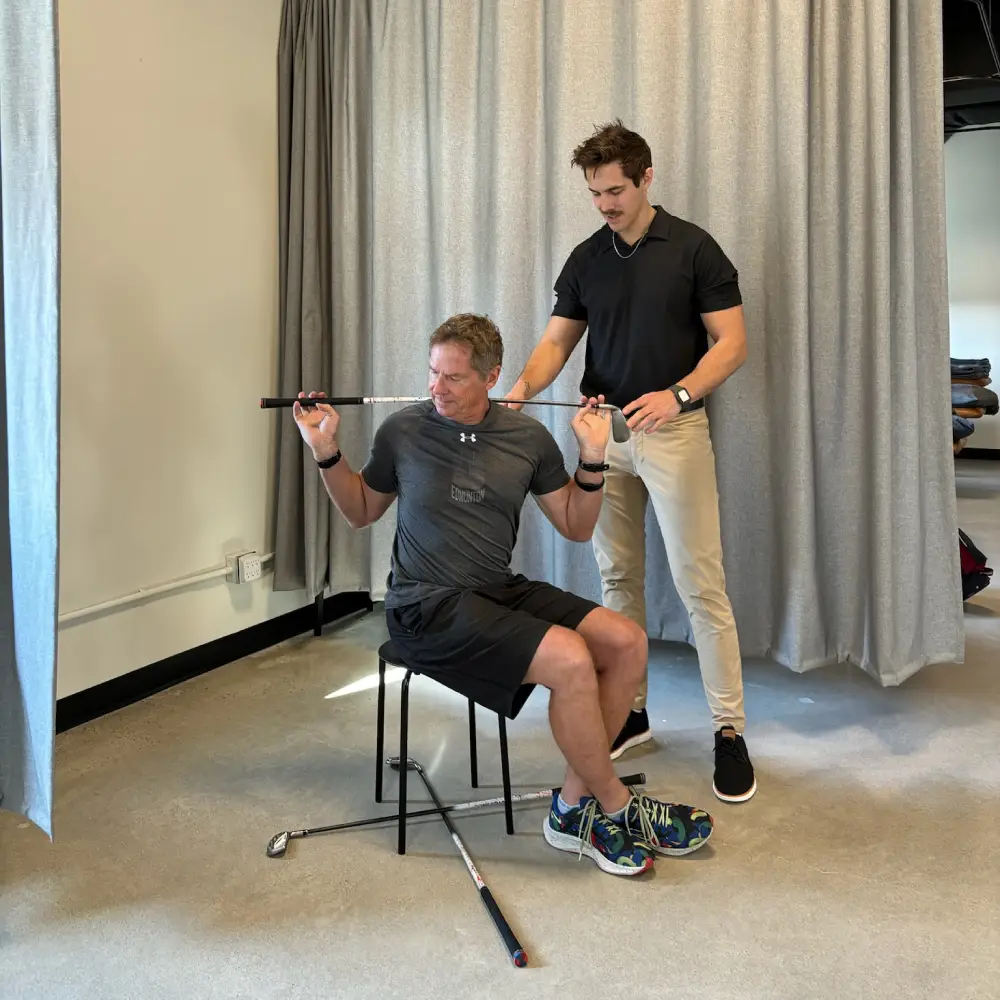
You may perform a series of movement tests designed to look at areas such as mobility, stability, strength, and movement control.
The results can help identify physical limitations that may be relevant to your swing.
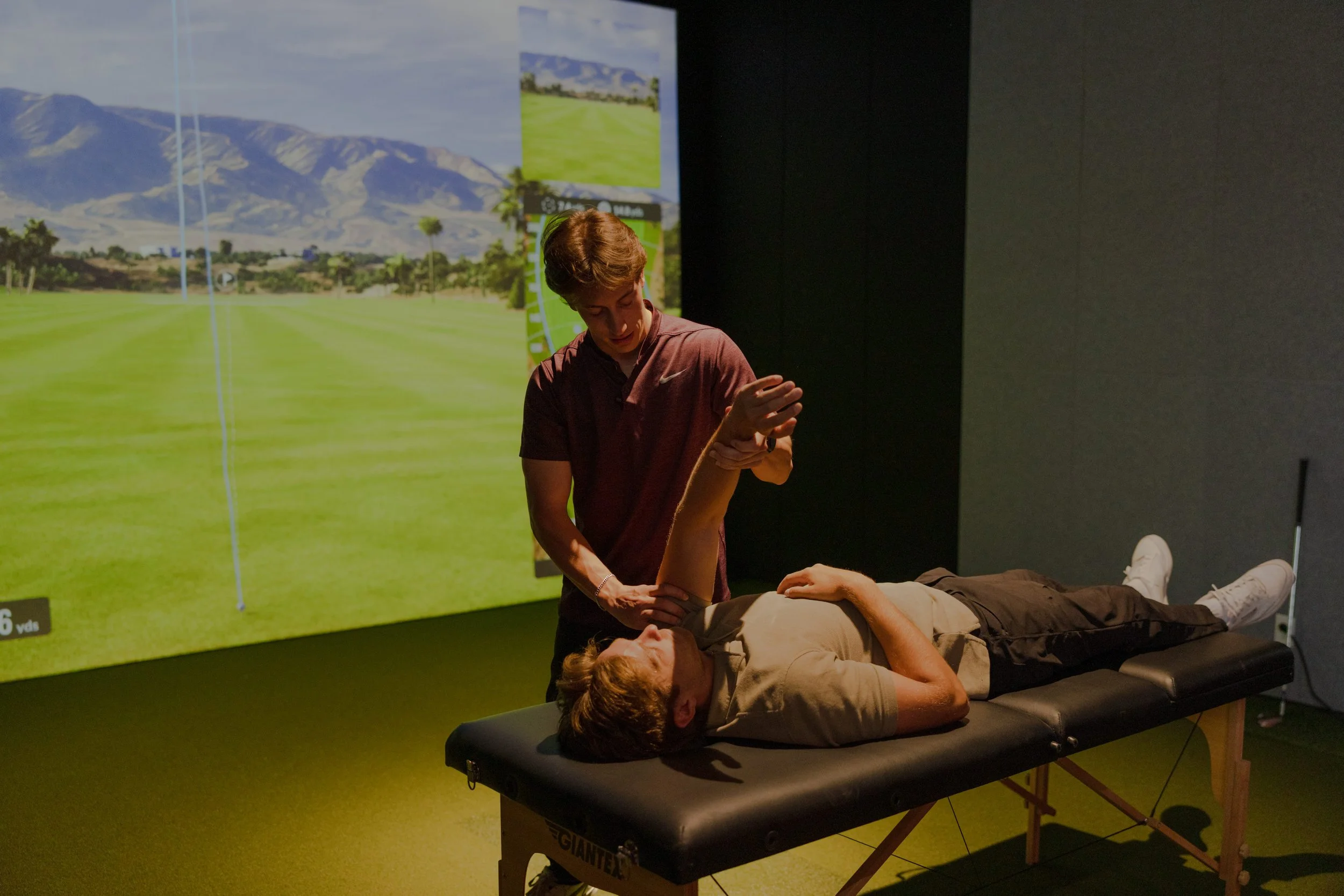
For example, if you struggle to rotate comfortably, have limited hip mobility, or have difficulty maintaining stability during certain movements, a practitioner may investigate whether those limitations are connected to what you see in your golf swing.
That does not mean every swing problem comes from your body.
Sometimes the solution is a swing adjustment from a golf professional. Sometimes it is physical training or rehabilitation. Sometimes you need both.
That is why TPI promotes a team approach involving golf, fitness, and medical professionals. (MyTPI)
What happens during the assessment?
Your exact appointment depends on the practitioner and the type of TPI assessment they offer.
A typical physical assessment may begin with questions about your golf game, physical history, previous injuries, activity level, and goals.
You may then complete a series of movement screens.
These can look surprisingly simple.
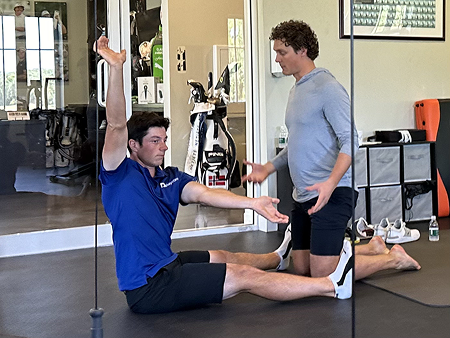
You may be asked to rotate your body, balance on one leg, squat, move your hips, raise your arms, or perform other controlled movements.
The purpose is not to see whether you can perform a complicated exercise.
It is to understand how your body currently moves.
TPI describes its Level 1 screen as a way to evaluate a golfer's physical capabilities and connect the results with characteristics of the golf swing. (MyTPI)
Depending on the practitioner, your assessment may also include discussion of your golf swing, video analysis, or other technology.
More advanced TPI programs can include additional testing and, in some settings, three dimensional motion analysis. (MyTPI)
What might the results tell you?
The assessment can help create a more specific plan.
For example, you may discover that you need to work on:
- Hip mobility
- Thoracic rotation
- Shoulder mobility
- Balance
- Core control
- Lower body strength
- Stability
- Power
- Movement sequencing
The point is not to collect a list of exercises.
It is to understand which physical areas may be relevant to your golf goals.
TPI describes its assessment results as a starting point for an individualized plan that may involve fitness training, physical therapy, swing coaching, or a combination of professionals. (MyTPI)
Who can provide a TPI assessment?
This is important.
There is no single profession called a TPI practitioner.
TPI certifies professionals across different areas, including golf, fitness, and medical fields. (MyTPI)
That means you could find a TPI Certified golf professional, fitness professional, physiotherapist, or another practitioner with TPI training.
Their professional background matters when you are considering insurance.
A TPI Certified physiotherapist is still a physiotherapist.
A TPI Certified chiropractor is still a chiropractor.
A TPI Certified golf professional is still a golf professional.
The TPI certification does not automatically change the professional's insurance billing category.
Can you claim a TPI golf assessment through your benefits?
Potentially, but this is where you need to check the details.
If a registered physiotherapist provides an assessment as an eligible physiotherapy service, your appointment may potentially be claimed under your physiotherapy benefits, depending on your extended health plan.
If a chiropractor provides the assessment as chiropractic care, it may potentially fall under your chiropractic benefits, depending on your plan.
In Ontario, chiropractic and physiotherapy are separate regulated professions. The Ontario Chiropractic Association specifically notes that a chiropractor cannot bill a service as physiotherapy unless they are also registered as a physiotherapist. (OCA)
So do not simply ask:
"Is TPI covered?"
Instead, ask:
"Who is providing the assessment, and what benefit category will the service be billed under?"
Before booking, ask the clinic:
- Is the practitioner a registered physiotherapist or chiropractor?
- Are they TPI Certified?
- What will appear on my receipt?
- Which benefit category will I use?
- Do you direct bill my insurer?
Then confirm your coverage directly with your insurer.
Canadian extended health plans can have annual maximums, per visit limits, deductibles, copayments, and other conditions. The Ontario Chiropractic Association recommends checking your coverage level, remaining balance, benefit renewal date, and any limits before treatment. (OCA)
What about a PGA golf assessment?
A golf assessment provided by a PGA professional is generally a golf instruction service rather than a medical or paramedical service.
That means you should not assume it is eligible for extended health benefits.
A PGA professional may also be TPI Certified, and a physiotherapist or chiropractor may also have extensive golf knowledge.
The letters after the practitioner's name and the billing category are therefore worth checking separately.
Who should consider a TPI assessment?
A TPI style assessment may be interesting if you:
- Have an inconsistent golf swing
- Feel restricted during your backswing or follow through
- Have an old golf related injury
- Want to understand your physical limitations
- Are returning to golf after an injury
- Want to improve your physical preparation for golf
- Keep receiving swing advice but struggle to make the change physically
You do not need to be a competitive golfer.
The TPI system is designed for golfers across different ability levels, and its certification program covers golfers from beginners through advanced players. (MyTPI)
Find a golf swing assessment
If you are curious about whether a golf swing assessment could fit your goals and benefits, start by looking at the practitioner rather than the label alone.
Check their professional credentials, TPI certification, assessment approach, and billing information before booking.